
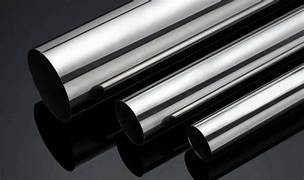
Low Carbon Marine Grade • Superior Corrosion Resistance
316L is a low carbon variant of 316 stainless steel, offering superior corrosion resistance, excellent weldability, and prevention of carbide precipitation during welding. Widely used in marine, medical, chemical processing, and pharmaceutical applications where corrosion resistance is critical.
316L stainless steel is an austenitic chromium-nickel stainless steel containing molybdenum. The "L" designation indicates low carbon content (0.03% max), which minimizes carbide precipitation during welding and provides improved corrosion resistance in the as-welded condition.
This grade is particularly valuable in applications where welding is required, as it eliminates the need for post-weld annealing in most situations. The molybdenum content (2-3%) provides enhanced resistance to pitting and crevice corrosion in chloride environments, making it ideal for marine applications.
316L exhibits excellent formability, weldability, and corrosion resistance. It maintains good mechanical properties at elevated temperatures up to approximately 425°C and retains excellent toughness at cryogenic temperatures down to absolute zero.
| Element | Minimum % | Maximum % |
|---|---|---|
| Carbon (C) | - | 0.030 |
| Chromium (Cr) | 16.0 | 18.0 |
| Nickel (Ni) | 10.0 | 14.0 |
| Molybdenum (Mo) | 2.0 | 3.0 |
| Manganese (Mn) | - | 2.0 |
| Silicon (Si) | - | 0.75 |
| Phosphorus (P) | - | 0.045 |
| Sulfur (S) | - | 0.030 |
| Nitrogen (N) | - | 0.10 |
Boat fittings, offshore platform components, subsea valve bodies, marine fasteners, propeller shafts, seawater piping systems, desalination equipment.
Surgical instruments, implantable devices, medical device components, pharmaceutical processing equipment, sterilization equipment, cleanroom fixtures.
Chemical processing vessels, heat exchangers, piping systems for corrosive chemicals, pump components, valve bodies, evaporators, condensers.
Food processing equipment, brewery systems, dairy equipment, beverage dispensing systems, commercial kitchen equipment, storage tanks.
Pulp and paper equipment, textile machinery, photographic equipment, architectural panels, coastal structures, pollution control equipment.
316L has a machinability rating of approximately 45% (compared to free-cutting B1112 at 100%). Work hardening during machining can be challenging. Use sharp tools, positive rake angles, and adequate coolant flow.
316L is readily weldable by all standard fusion and resistance welding processes. The low carbon content minimizes carbide precipitation, eliminating the need for post-weld annealing in most cases.
Excellent formability. Can be deep drawn, bent, and formed by standard methods. Work hardening occurs during cold forming but can be restored by annealing.
Get a quote for AS9100D certified 316L stainless steel machining with full material traceability.